




Philosophy
Philosophy brings epistemology, aesthetics, and ethics together as normative philosophy, develops an immanent metaphysics under critical conditions, and considers transcendence beyond conceptual thought.
Memphis Theology l Amduat l Hermetism
Ancient Egyptian Studies approaches Egyptian religion, ritual, and sapiential thought through primary texts, translations, and commentary, showing how Ma’at, renewal, ascension, and sapience articulate the Egyptian ante-rationality of human and Divine order.

Four Noble Truths l Merit l Emptiness
The Buddhadharma begins with the diagnosis of suffering, its cause, its cessation, and the path leading to cessation ; through merit, meditation, and wisdom, it advances toward liberation and awakening, distinguishing the paths of purification, renunciation, compassion, transformation, and self-liberation within the vehicles of Sūtra, Tantra, and Dzogchen.
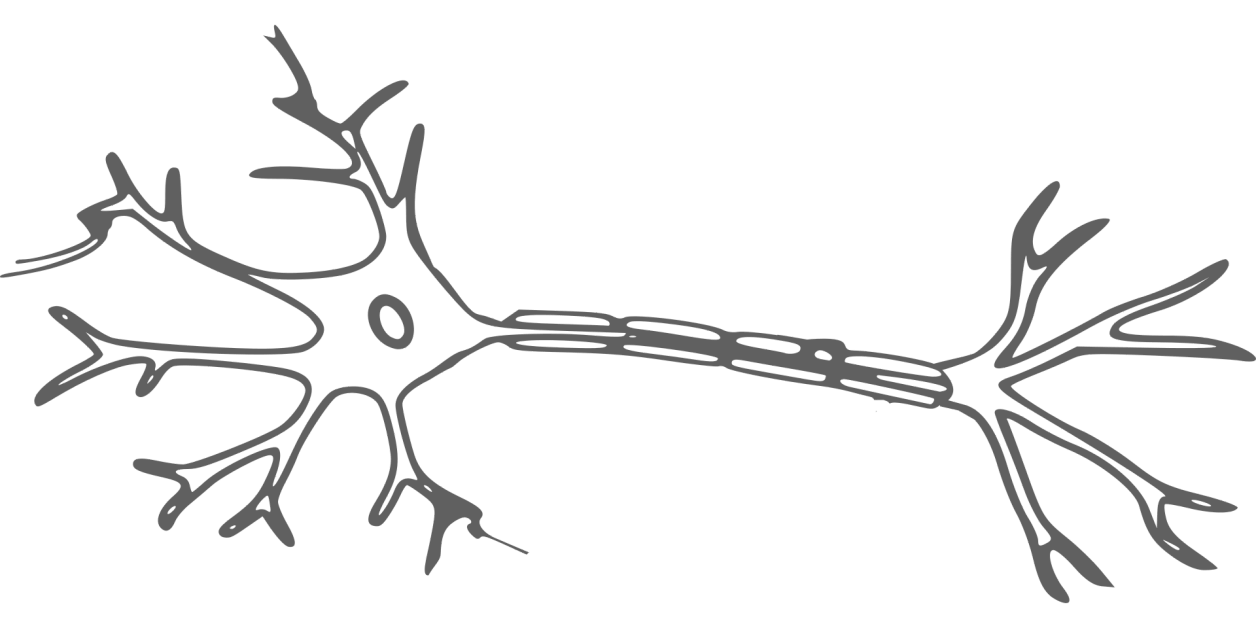
Neurophilosophy examines the relation between brain and mind, the nature of consciousness, and the interaction of material, informational, and mental states.
This section needs reworking.
Let us begin clearly : within the present immanent-metaphysical scheme, mental states are neither material states nor reducible to informational structures. They are non-spatial and irreducible occurrences, first-personally given only within the unique field of an individual subject, although publicly ascribable to the embodied person. Logical primitiveness belongs not to the states themselves but to that person, as the single bearer to whom both mental and corporeal predicates apply. Mental states are therefore ontologically distinguishable from material states and informational organization without being separable from either : they are functionally interdependent with both.
The brain is not conceived as having a secondary role. On the contrary, for an individual to manifest as a conscious entity (as a sentient being) in the physical continuum, needs a brain. Brain and mind are co-relative operators in a triune equation covering matter (hardware), information (software), and consciousness (userware). Mind refers to consciousness (C), whereas the brain is material and informational (MI). The interaction between C and MI is the crucial factor in this argument.
The available texts are divided into preliminaries, epistemology, ethics, aesthetics, metaphysics, hermeneutics and religious studies, Ancient Egyptian literature, Hermetism, Hermeticism, and the Buddhadharma.
Details can be consulted here.
The available texts are divided into Dutch hermeneutical studies, and investigations into yoga, qabalah, the Jesus-people, the Didache, the Gospel of Thomas, the Third Life of Ruusbroec, Sufism, with short intros into Hinduism, Buddhism, Judaism, Christianity, and Islam. Details can be consulted here.
Three GPTs are available. These were trained with the above books, the information from the website, and its subdomains.
Always triple-check the information given by AI.
Not all publications are mentioned here.