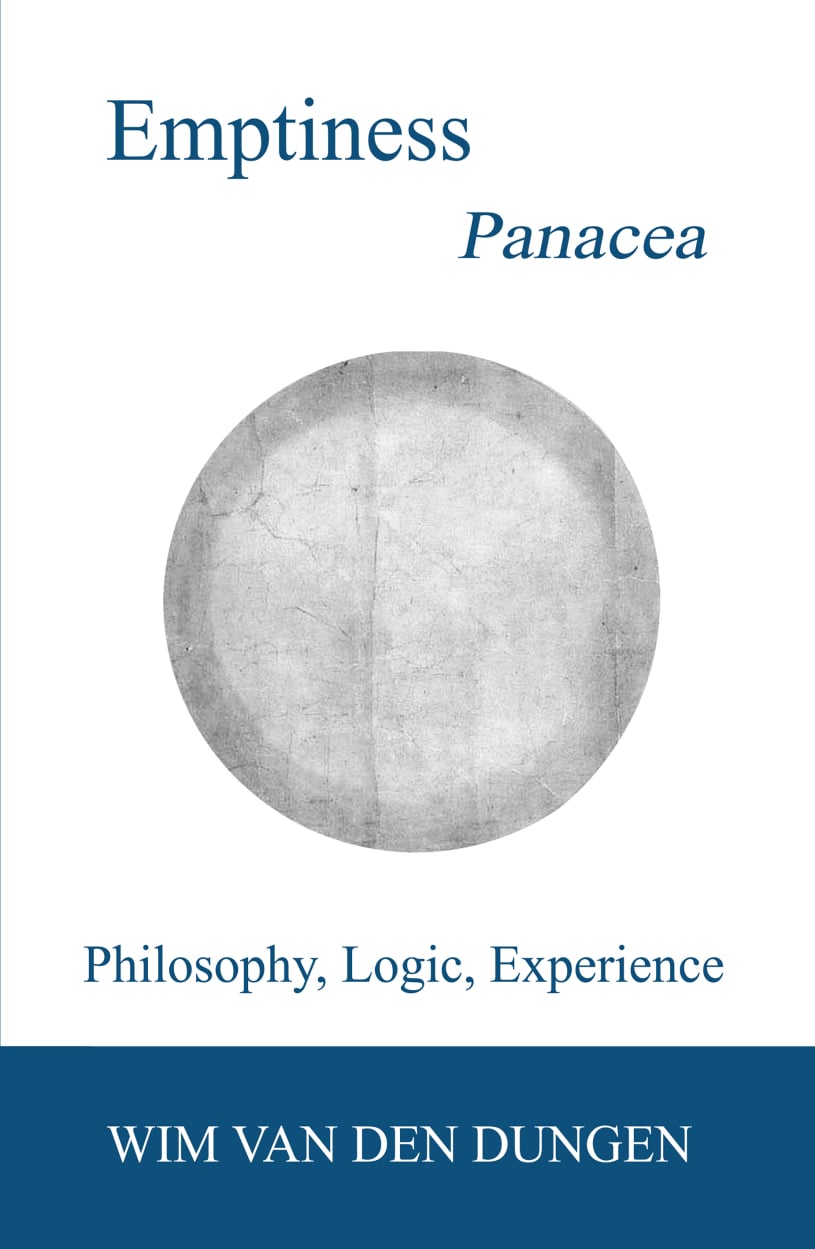
Emptiness Panacea develops a philosophical, logical, and experiential account of emptiness (śūnyatā), understood as the absence of inherent existence in persons and phenomena. Emptiness is not nothingness and does not negate conventional existence. It denies that anything exists independently, permanently, or from its own side. Its correlate is dependent arising : because things lack self-sufficient existence, they can arise, change, function, and enter relations.
The first part reconstructs the philosophical foundations of emptiness. It moves through perception, sensation, cognition, conceptual designation, and conventional truth toward compassion, selflessness, and the ultimate analysis of persons and phenomena.
The second part formalizes this analysis as Ultimate Logic, exposing the contradictions involved in attributing substantial or inherent existence to what arises dependently. The third part turns from conceptual understanding to meditative realization, showing how insight into universal selflessness and dependent arising can become experiential rather than merely argumentative.
The final part examines other-emptiness, Buddha-nature, Mahāmudrā, and Dzogchen and asks how self-empty analysis relates to the luminous nature of mind. The work proposes a harmony : self-emptiness supplies the strongest philosophical account of how things exist, while other-emptiness articulates the yogic realization of mind free from adventitious obscuration.
Emptiness functions as a panacea against reification, self-grasping, and the suffering they sustain.

Emptiness Panacea
Emptiness Panacea